ROLLER PRESS

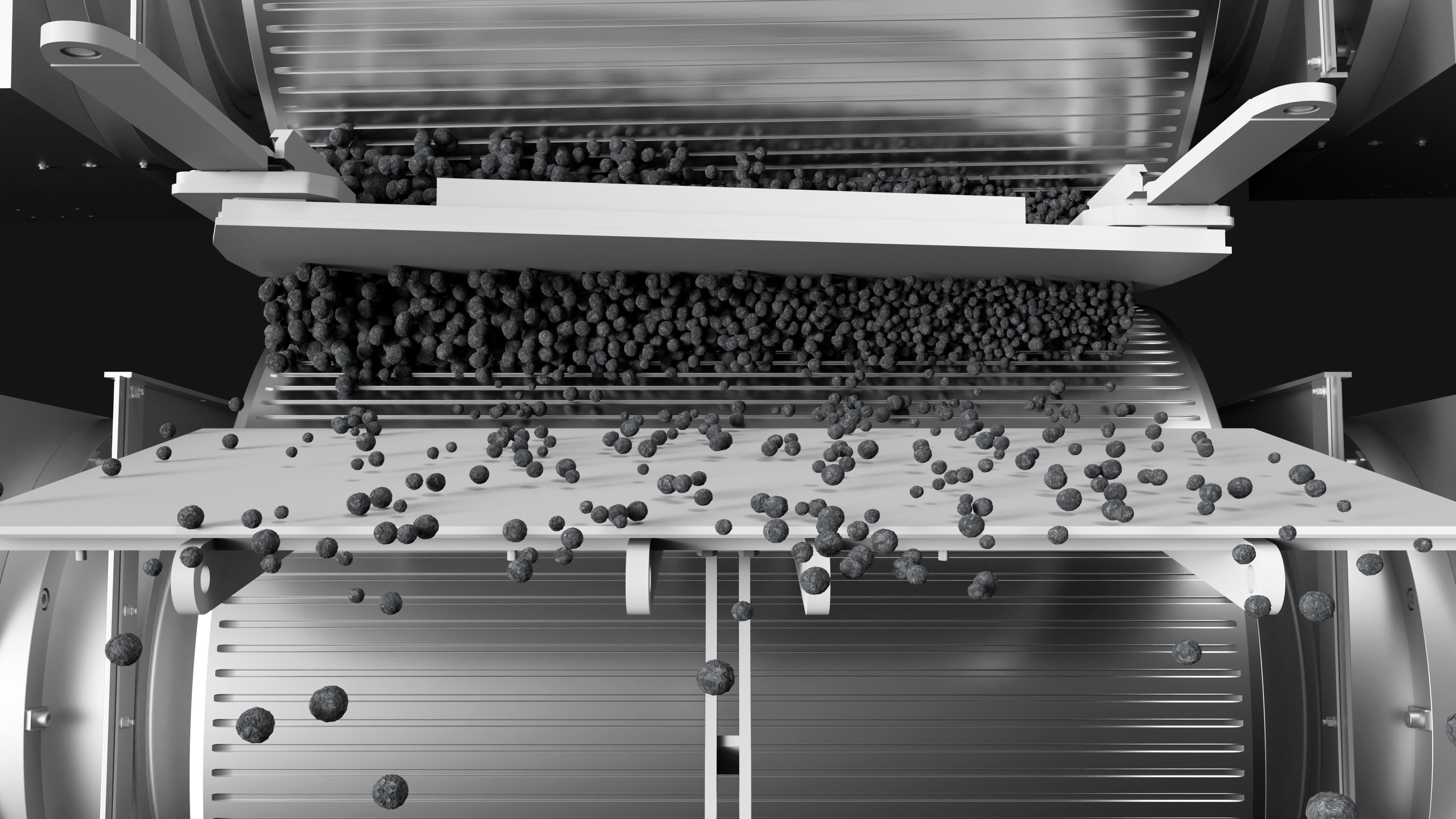
The roller press is the most energy-efficient grinding machine available. Over 550 KHD units operate worldwide, grinding raw meal, clinker, and slag, in both finish and semi-finish configurations. With the lowest energy consumption, simplified maintenance, and unmatched flexibility, roller presses set the standard for efficient cement production.
Superior energy efficiency
Roller press circuits consistently deliver the lowest specific energy consumption of any comminution technology – up to 3.0 kWh/t lower than comparable vertical roller mill (VRM) installations in finish mode. This efficiency stems from the roller press’s unique grinding mechanism: high-pressure interparticle comminution maximizes energy transfer while minimizing waste heat. When used in semi-finish configurations with ball mills, the roller press reduces ball mill power use, delivering specific power consumption similar to that of a VRM circuit in the same application.
Simplified maintenance requirements
Roller press systems feature straightforward maintenance protocols, with all critical wear components – including rollers, bearings, and external separators – accessible without confined space entry or extended cooling periods. Roller exchanges are completed in 4 days, compared to 7-10 days per VRM roller. Meanwhile, the latest hi-chrome surface significantly extends the time between replacements.
Optimized thermal management
Roller press circuits require no water injection for raw meal grinding and minimal or no water injection for cement production, eliminating the operational complexities, hot gas drying requirements, and cement quality compromises inherent in VRM water spray systems.
Unmatched operating flexibility
Roller press installations can be configured for finish grinding, semi-finish grinding with ball mills, or as upgrades to existing circuits. The same roller press can also efficiently grind raw materials, clinker, and ground granulated blast furnace slag, allowing operators to switch between grinding tasks without equipment changes – a flexibility particularly valuable for plants producing multiple cement types. Meanwhile, separating grinding and classification allows independent optimization of each process stage, while the robust design handles highly abrasive materials and variable feed conditions that challenge VRM stability.
High availability and reliability
With its unique bearing system, long-lasting roller surface protection, and ease of roller exchange, KHD roller presses are designed to deliver the highest levels of reliability and availability. They keep grinding, keeping your production flowing, stress-free. Looking for uninterrupted, long uptime? A roller press is the way to go.

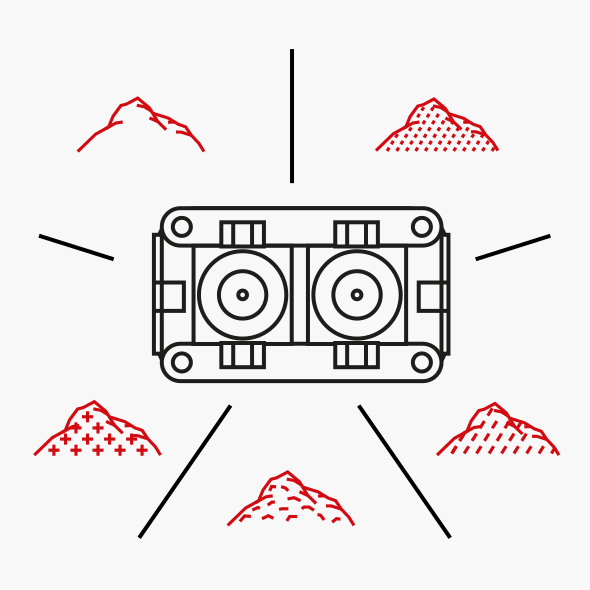

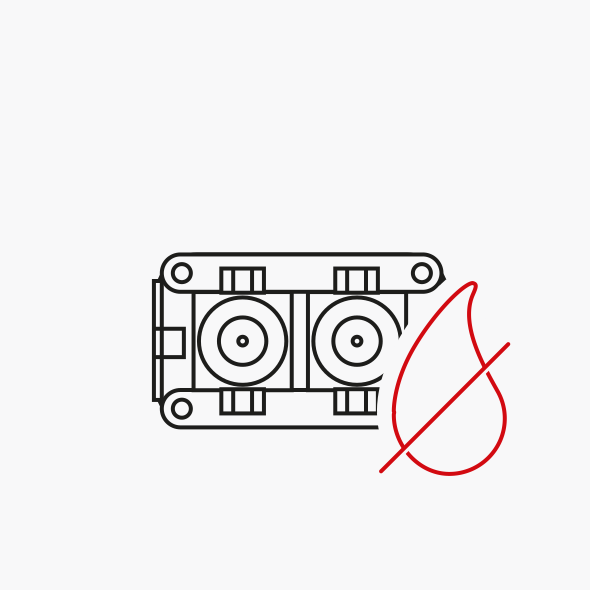

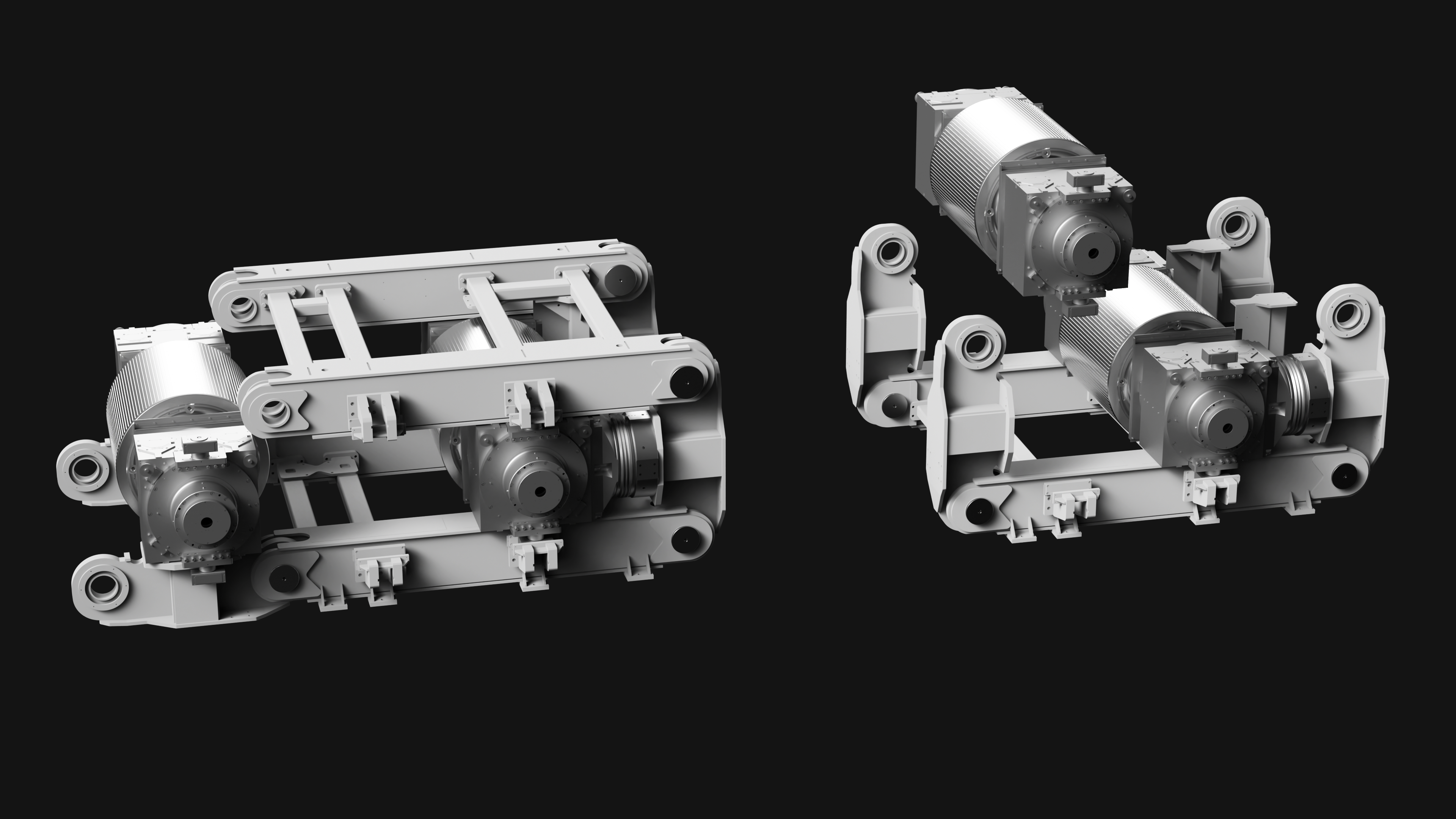
The RPE represents the next chapter in KHD roller press innovation. Building on decades of field experience and hundreds of roller press installations worldwide, the RPE incorporates evolutionary innovations that enhance reliability, simplify maintenance, and improve operational efficiency. From the advanced Rolcox 3.0 control system to the innovative frame design and efficient feed, every element has been refined to deliver best-in-class performance. Explore the key features below.

Click and hold the left mouse button while moving the cursor outside a center point to spin or view.
Proven in over fifty installations, the Rolcox 3.0 monitoring and control system keeps your roller press running reliably. Based on advanced Siemens S1500 hardware with a unified programming library, Rolcox 3.0 features IO-Link technology, delivering more data and configuration options while simplifying cable management. All key machine parameters can now be viewed at a glance on the machine via an integrated HMI. And when you need support, native remote access enables fast reaction times.

Integrated HMI
View all key machine parameters at a glance at the machine.

IO-Link technology
Deliver more data and configurations with simpler cable management.

Remote access
Enable quick troubleshooting support with native remote access.
The new material feed features our standard RP deflector combined with an innovative skewing dosing gate. It minimizes roll skewing and ensures uniform material distribution across the full roller width, enabling optimal grinding pressure and enhanced performance.
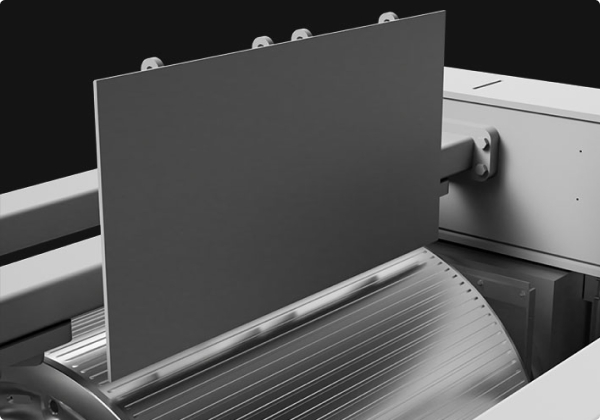
RP deflector
Guide material evenly into the roller gap for improved throughput and efficiency.
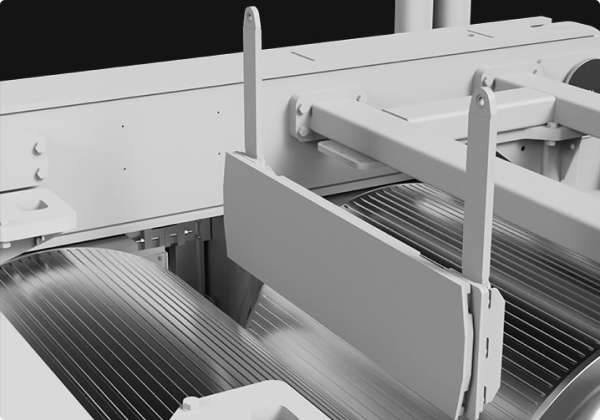
Skewing dosing device
Minimize roll skewing to stabilize and equalize the roller gap to the feed size.
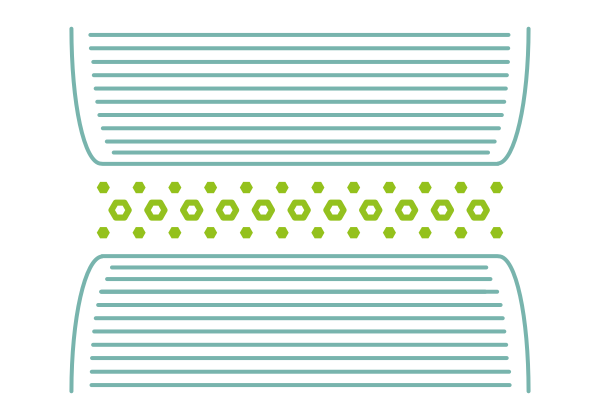
Predictable, even wear
Consistent material feed avoids localized wear and material build up, extending wear life.
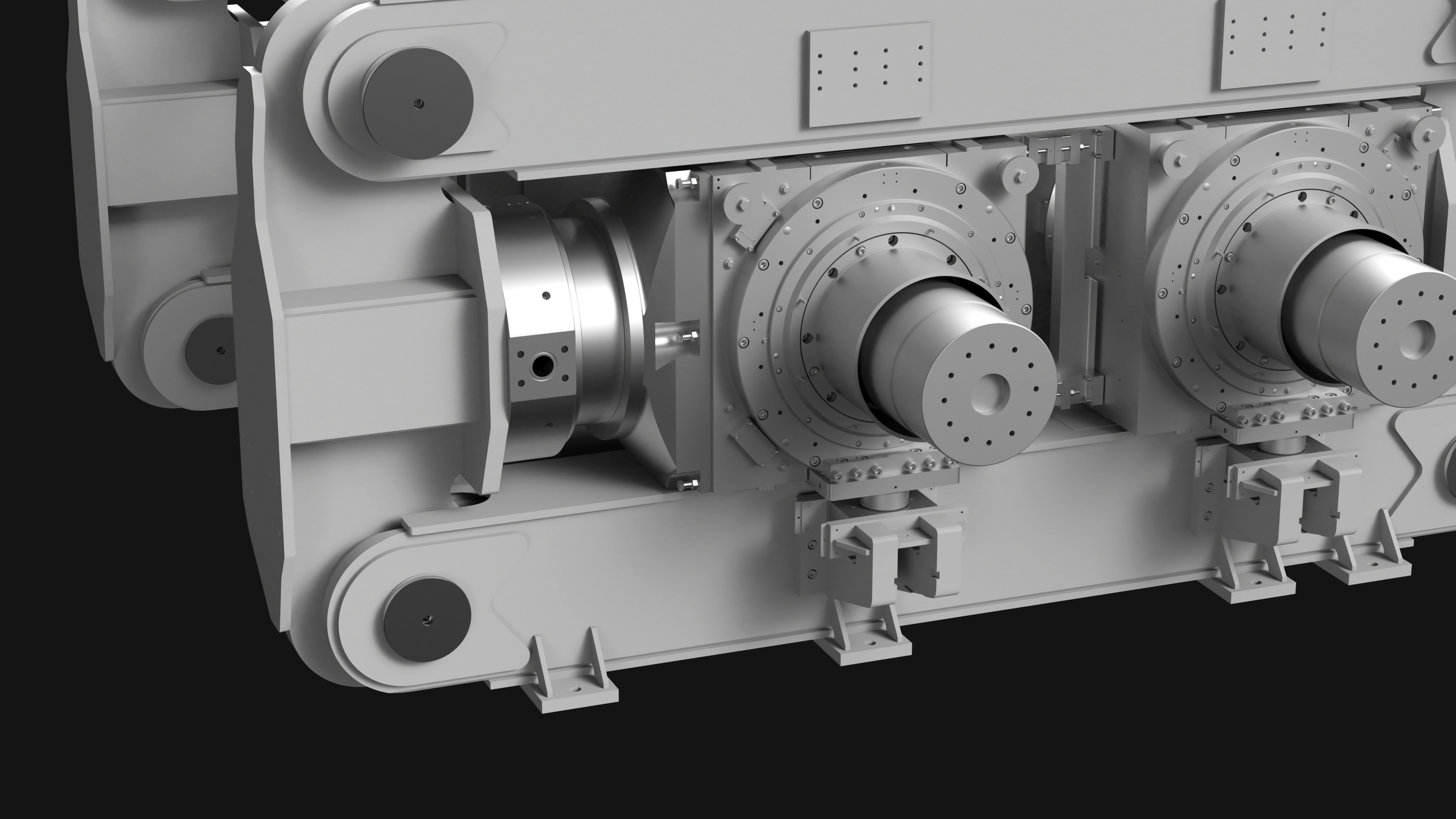
A redesigned frame construction replaces nearly 200 pre-stressed expansion bolts with just eight radial spherical plain bearing bolts. These bearing bolts also allow the bearing housings to move with the movable roller, eliminating the rubber thrust pads. Both horizontal and vertical roller exchange options are now available in the same frame, with significantly fewer parts to remove during roller replacement. The smaller footprint and reduced height enable more compact installations.

Flexible access
Top and side access for roller exchange improves planning and maintenance flexibility.

Smart frame construction
Just eight radial spherical plain bearings replace 200 pre-stressed bolts and the rubber thrust bearings.

Compact design
Smaller machine footprint and height reduces building requirements.
KHD’s hi-chrome surface delivers up to 50,000 operating hours between maintenance interventions. Its precision-machined profiling handles oversized and foreign materials while ensuring excellent nipping even with varying grain sizes. Meanwhile, no welding means no risk of thermal damage, such as micro-cracking, to the bandage.
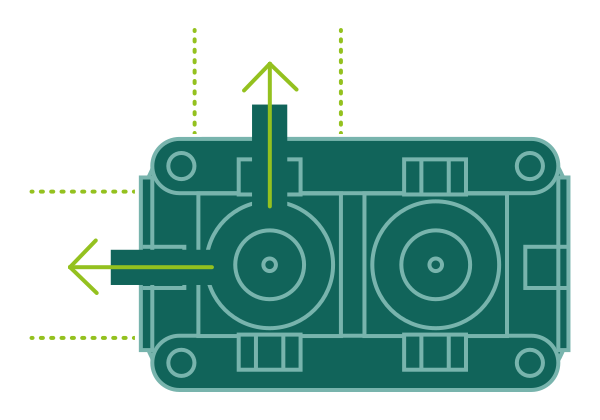
Reduce downtime
Cut maintenance by eliminate reprofiling and extending time between stops.
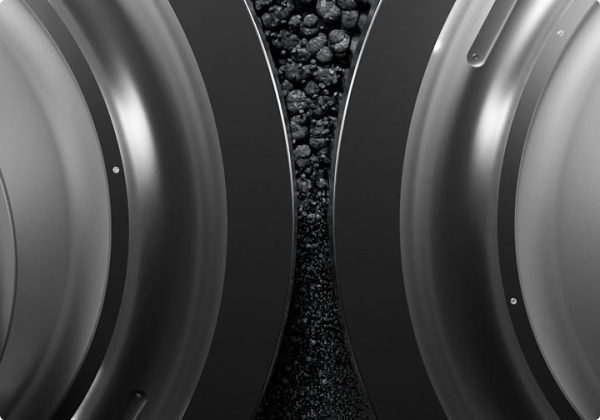
Machined profiling
Handle oversize and tramp material while ensuring excellent nipping.

No welding
Eliminate welding and the risk of thermal micro-cracking to the surface.
The right grinding technology impacts everything from your energy bills to maintenance schedules and carbon capture readiness.
So how do roller presses compare to VRMs and ball mills?
| Roller Press | VRM | Ball Mill | |
|---|---|---|---|
| Energy consumption | Up to 3.0 kWh/t lower than VRM for equivalent production. | Higher than roller press, lower than a standalone ball mill. | Highest, however, when combined with RP in semi-finish configuration, total energy consumption is comparable to VRM |
| System arrangement | Requires roller press, separator, ancillary equipment. | Most compact; single integrated unit. | Requires mill and separator (in a closed circuit). |
| Operational flexibility | Finish or semi-finish modes; handles raw material, clinker, slag; can upgrade existing circuits. | Can handle high-moisture materials; difficult to retrofit and switch between grinding applications. | Can be upgraded with roller press; handles all materials. |
| Maintenance requirements | External bearings, minimal hydraulics, 3-4 days for roller exchange, no confined space entry. | Internal separator inspection requires confined-space protocols, cooling time, scaffolding, and a complex, heavy gearbox; 7-10 days per roller exchange. However, can operate at reduced capacity if designed for online maintenance. | External bearings, minimal hydraulics, simple foundation, easy alignment, requires confined-space protocols, cooling time, easy access, no special tools required |
| Water injection / heat demand | None required for raw material; minimal/none for cement – no hot air generator needed. | Required for cement grinding stability – impacts product quality; requires a hot air generator in many configurations. | None required for raw material. Depends on material cooling requirements. In the case of cement, it can be used to support cooling if the fresh air is insufficient. |
| Civil construction and vibration impact | Smaller footprint; can be installed directly on the ground with low-moisture feed; foundation ~40% of VRM. Low vibration impact. | Can generate strong vibrations that may impact surrounding equipment and require massive foundations to attenuate. | Simple construction, higher footprint. No vibration impact. |
| Product quality | Same as a ball mill and ball mill + roller press. | Must grind finer than RP for equivalent quality. | Produces well-rounded particles with good cement strength development. |
Roller presses are available for all major grinding applications and for a wide range of throughputs.
All values are based on finish grinding production.
Raw Grinding
t/h @ 8 – 20% R90 µm

Clinker Grinding
t/h @ 3000 – 4000 cm2/g

Slag Grinding
t/h @ 4000 – 5000 cm2/g

Roller press technology delivers minimal downtime compared to other grinding options. Fewer wear parts – and easier access to those that do wear – mean shorter, less frequent maintenance stops compared to other grinding technologies. All critical components are accessible without confined-space entry or extended cooling periods, while minimal hydraulic systems reduce seal maintenance and leakage risk.
The RPE builds on these advantages. Maintenance is easier and quicker than ever before, increasing uptime even further:
Importantly, we have designed the RPE to be fully backwards compatible with existing spare parts for the same-size roller press, protecting your spare parts investment. It adds up to a machine that delivers reliable productivity for longer.
The roller press delivers exceptional versatility across finish and semi-finish grinding applications. With flexible equipment arrangements that adapt to site-specific constraints and existing infrastructure, KHD offers proven configurations for new grinding plants, circuit upgrades, and capacity expansions.
Finish Grinding – Conventional
Ideal for cement grinding with low-moisture feed materials, this proven configuration positions the RPE at ground level to minimize building height and civil construction costs. A dynamic SKS-V(C) separator ensures precise particle classification with low pressure drop.
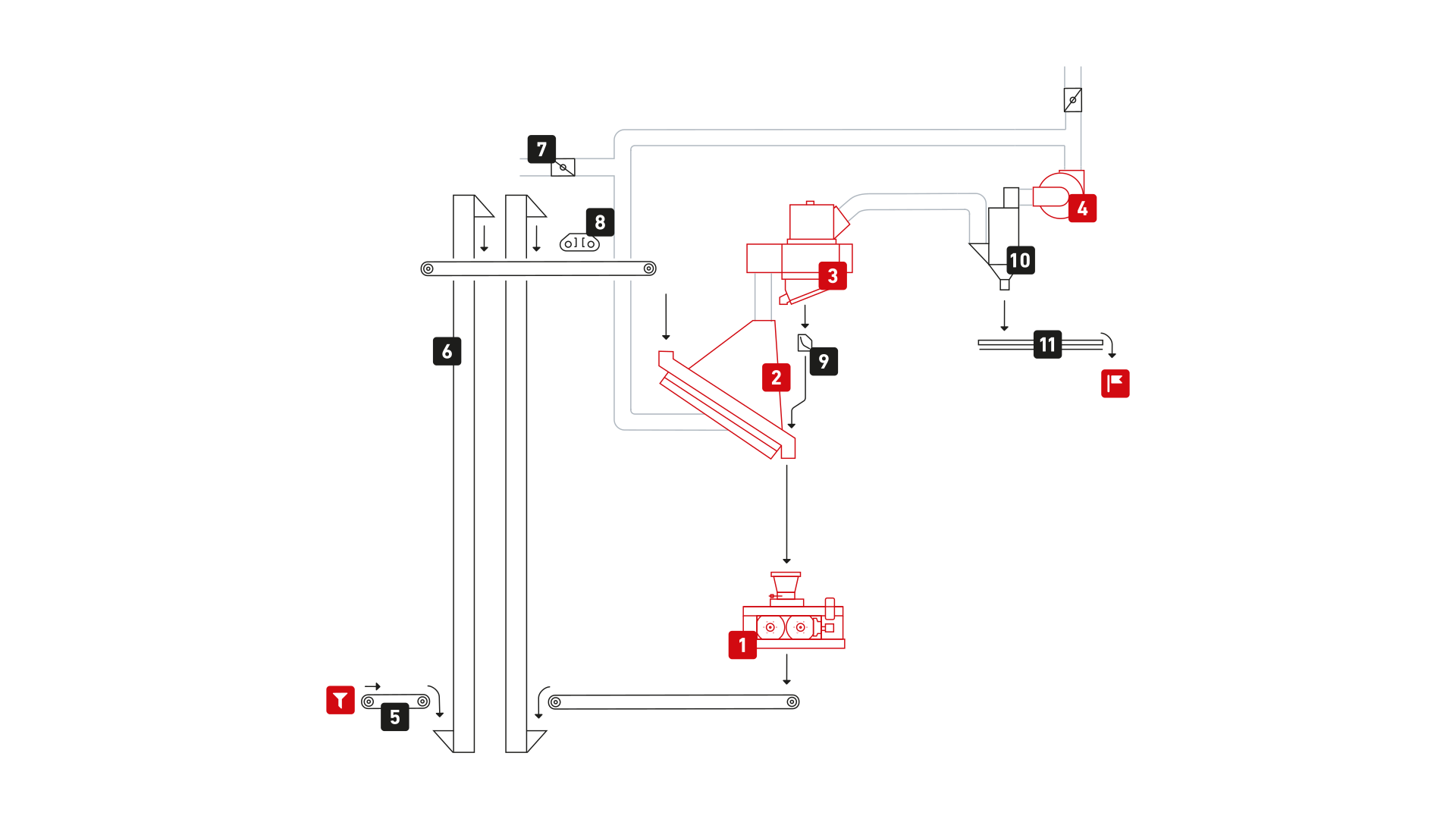
Finish Grinding – Comflex®
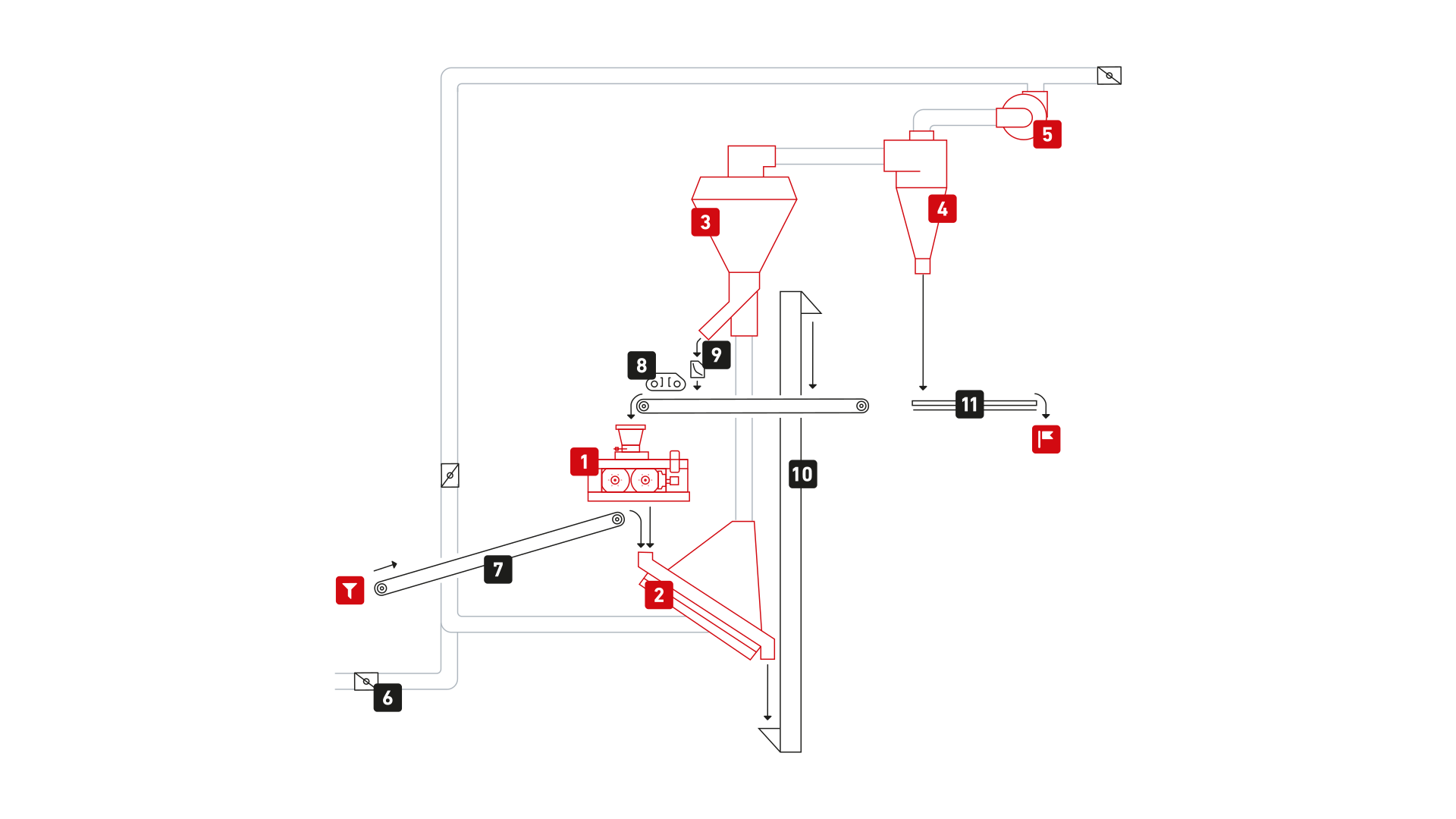
The Comflex® configuration routes separator rejects directly back to the roller press, eliminating a recirculation pass through the bucket elevator. This compact circuit is particularly suited to raw material grinding and applications with higher feed moisture. A V-separator handles most dedusting, reducing downstream dedusting requirements.
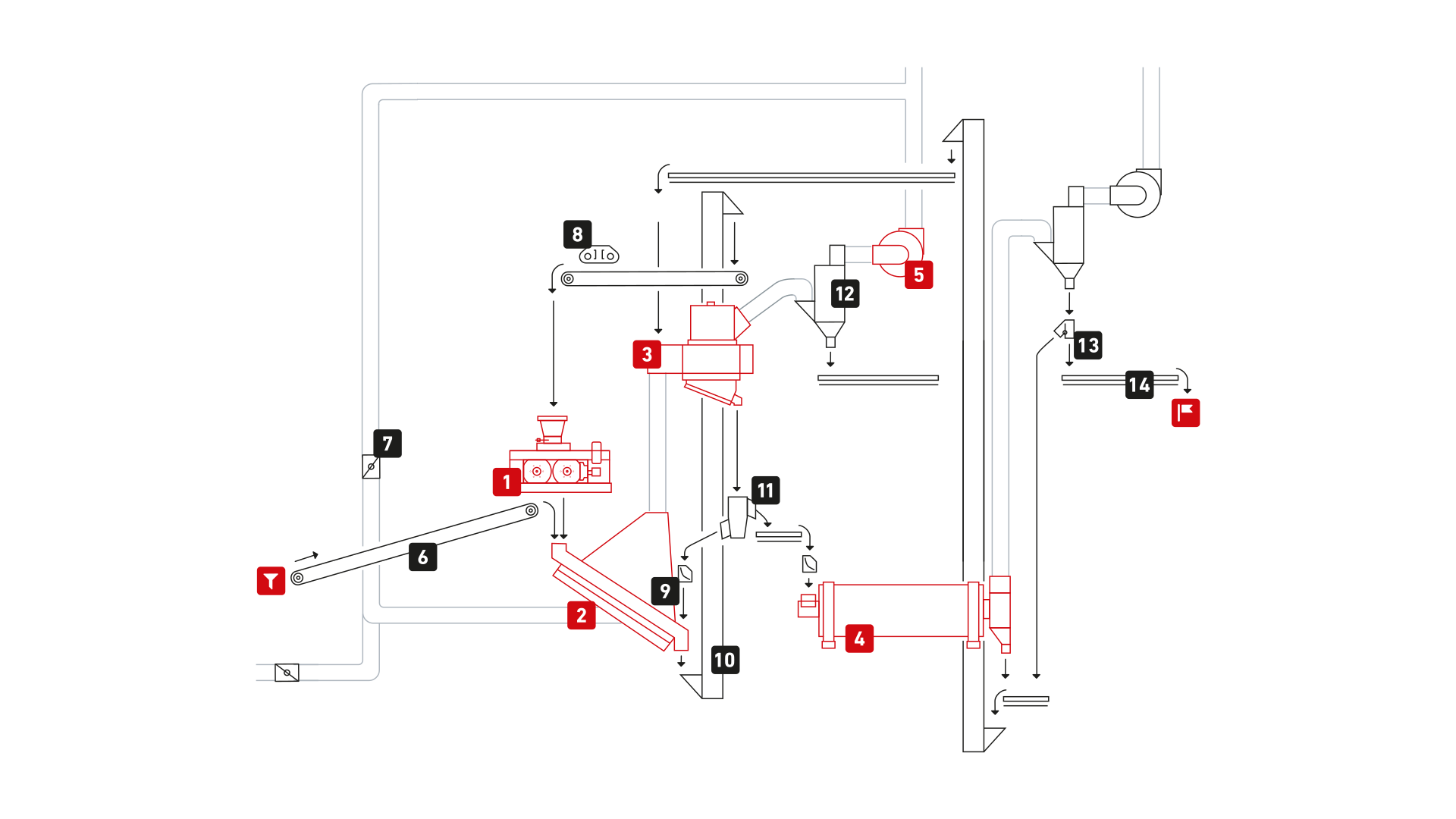
Semi-Finish Grinding – Comflex®
This Comflex® configuration upgrades existing closed-circuit ball mill installations by adding a roller press pre-grinding circuit with static and dynamic separators. Designed primarily for cement grinding, this configuration can be used for new installations or upgrading existing open-circuit ball mills to achieve production capacity increases.
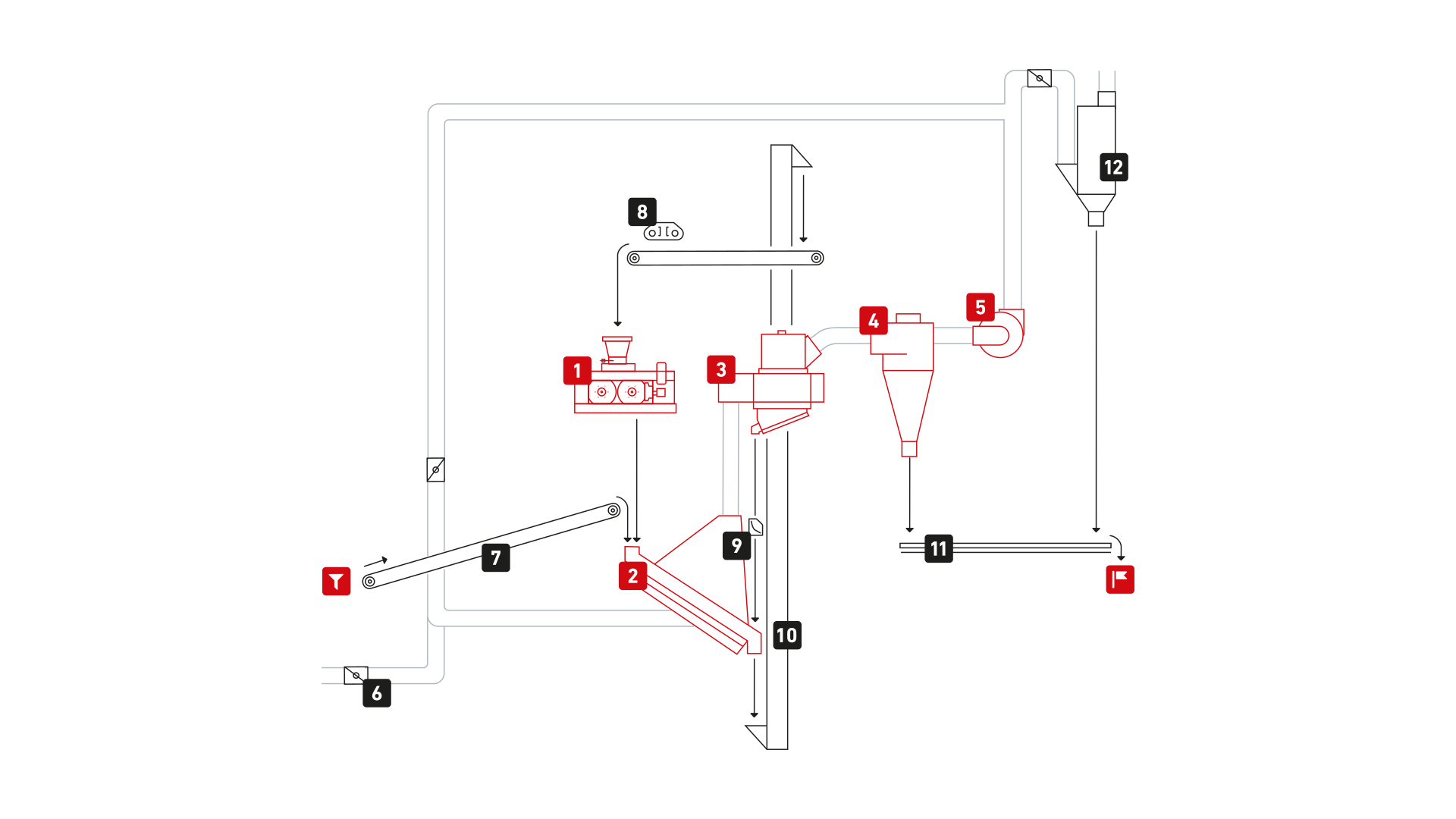
Finish Grinding – Comflex® Compact
The Comflex® Compact delivers efficient finish grinding in a space-saving arrangement and is suitable for cement, raw material and slag grinding. The compact design reduces building height and civil construction costs. A V-separator handles most dedusting, minimizing downstream dedusting requirements.
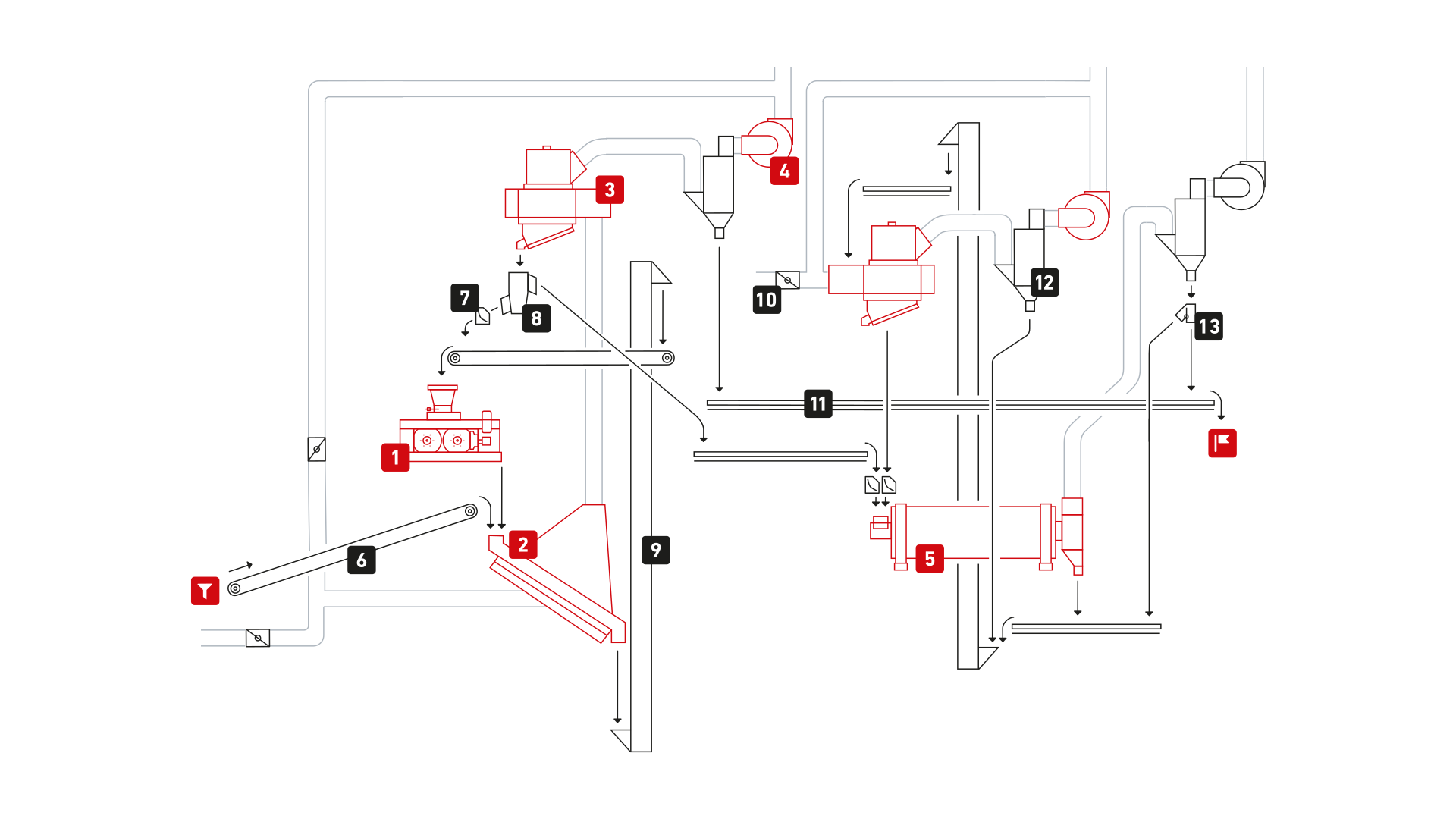
Semi-Finish Grinding – Comflex® Compact
The Comflex® Compact semi-finish configuration combines a space-saving roller press pre-grinding circuit with a ball mill circuit. The roller press handles the energy-intensive initial grinding step. Roller press fines are directed to the finish product stream, while coarser fractions proceed to the ball mill for finish grinding.
Finish Grinding – GrindC
The GrindC configuration positions the roller press and separator on the same level, minimizing building height and civil construction costs. This compact horizontal layout is ideal for space-constrained sites and can accommodate varying feed moisture levels. Performance is comparable to conventional finish grinding circuits.

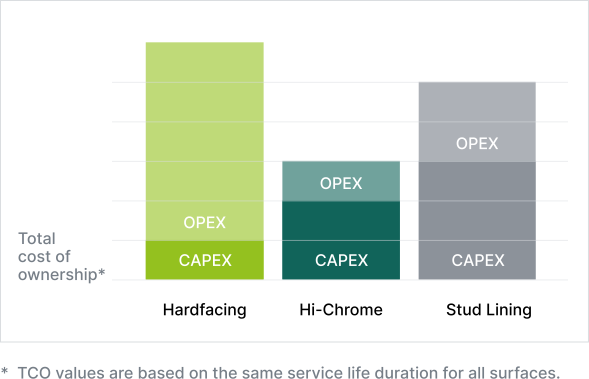
Wear is a fact of life. But if not properly monitored and controlled, it can degrade grinding performance, lower production rates, and significantly extend maintenance downtime for your machine and production. Deciding on the best wear protection for your process is therefore an important task – and one where expert opinion can help ensure the best results. Our engineers will take all relevant factors into account to recommend the type of wear protection best suited to your application, choosing from three technologies: hi-chrome, hardfacing, or stud lining.
Comparision of CAPEX and OPEX
KHD's newest wear option is a special compound-cast bandage with a wear-resistant hi-chrome surface. Because the profile is ground into the surface rather than welding extra material on, we prevent tiny surface cracks that can lead to major follow-up problems during regular operation. Another special feature is that the profile is designed to prevent material embedding. The result? A service lifetime exceeding 50,000 hours.


New Condition
Starting Wear

In-shape Wear
Rollers with hardfacing are ideal for cost-conscious applications and grinding plants that conduct intermediate rewelding. Such maintenance jobs can be executed during regular daily stoppages thanks to intelligent service solutions such as KHD's in-situ roller grinding.

Rollers with stud lining feature a special pattern of extremely wear-resistant tungsten carbide studs inserted into the roller surface. The stud arrangement is also designed to develop an autogenous wear protection layer from ground material. Stud lining delivers very high service life - up to 60,000 hours - without regular surface maintenance in applications that do not contain oversized feed material.

Overview wear surface options
| Hardfacing | Hi-Chrome | Stud Lining | |
|---|---|---|---|
| Feed material | Suited for raw materials, clinker; cost conscious applications | Suited for clinker, raw materials with consistent feed sizing | Suited for slag, clinker, and raw materials requiring high product fineness |
| Service life | Service life up to 10,000 – 15,000 hrs** | Service life exceeding 50,000 hrs** | Service life up to 60,000 hrs** |
| Maintenance | Regular rewelding intervals; can be refurbished | Minimal maintenance; no rewelding required | Nearly maintenance-free operation |
| Refurbishment | Rewelding during scheduled stops; in-situ grinding available | Mechanically-ground profile wears evenly; no crack risk from welding | Autogenous wear protection layer develops; no regular surface work |
| Cost | Most economical initial cost | Premium option with the lowest lifecycle cost | Highest investment, highest lifetime, medium lifecycle cost |
| Characteristics | Flexible, serviceable, cost-effective | Longest life, stable performance, no thermal damage risk | Exceptional wear resistance for abrasive materials |
** Depending on material characteristics.



Are my existing spare parts compatible with the latest RPE roller press?
Yes, we have ensured the existing spare parts are compatible with the latest RPE roller press.
How do roller press circuits support waste heat recovery (WHR) systems?
Roller press grinding circuits offer significant advantages for maximizing waste heat recovery potential compared to VRMs. Because roller press technology requires no water injection for raw material grinding and minimal to no water injection for cement production, the exhaust gases contain more recoverable thermal energy. In contrast, VRM systems require water spray for grinding stability, particularly in cement applications. This injected water must be evaporated using heat from the exhaust gases, substantially reducing the temperature and energy content available for waste heat recovery systems. The result: roller press installations can deliver higher WHR output from the same kiln line.
Aren’t VRMs simpler because they are one integrated machine?
While VRMs combine grinding and classification in a single housing, this apparent simplicity can create operational limitations. Roller press circuits separate grinding and classification into distinct stages, allowing independent optimization of each. You can adjust grinding parameters without affecting separation – and vice versa. Need to increase production? Add separator capacity. Switching materials? The same roller press handles raw material, clinker, and slag. Upgrading an existing ball mill? Integrate a roller press. VRM systems offer none of these options.
Can roller presses handle high capacities?
Yes. KHD roller press technology scales from small grinding operations to the largest cement production lines in the world. The RP series ranges from the RP7 (suitable for ~150-250 tph depending on application) up to the RP24—currently the largest roller press available globally. The RP24 can deliver over 1,000 tph of raw material grinding and up to 280 tph of clinker grinding, making it ideal for high-capacity cement plants
Don’t I need a ball mill to ensure cement quality?
No. Roller press circuits in finish grinding mode consistently produce high-quality cement that meets performance specifications without a ball mill. Roller presses can also achieve target cement quality at lower fineness levels than VRMs – meaning you’re grinding less while achieving the same or better performance. Roller press finish grinding is proven across all major cement types: OPC, PPC with high fly ash content, and PSC with slag. Multiple installations demonstrate consistent quality performance in finish mode, including plants producing premium cement grades for demanding applications. That said, combining a roller press with a ball mill in semi-finish configuration does offer advantages – particularly as an upgrade option to existing ball mill circuits. When a ball mill is preferred, KHD continues to supply these.
Does KHD still supply ball mills?
Yes, KHD does still supply ball mills, as well as integrated roller press-ball mill circuits.
How compatible are roller press systems with carbon capture technology?
Roller press circuits are highly compatible with carbon capture systems, offering better gas circuit control and separator flexibility than VRMs. Roller presses allow superior control over false air intrusion into the gas circuit, which is essential for maintaining the CO₂ concentration levels required for efficient carbon capture. Because separators are external components rather than integral to the grinding mill (as in VRMs), sealing and isolation strategies can be optimized specifically for carbon capture requirements. The modular design of roller press circuits also means separators can be engineered or modified to operate under the specific gas conditions required by carbon capture systems—including reduced oxygen levels, altered pressure profiles, or modified gas compositions. VRM internal separators, by contrast, are constrained by their integration within the mill housing, limiting adaptation options.
Why is the new KHD roller press called the RPE?
The ‘E’ in RPE reflects the key benefits of the machine’s design and performance: economical, enhanced, and efficient.
| Year | Country | Customer | Throughput (t/h) | Feed material | Model & Dimension (mm x mm) |
|---|---|---|---|---|---|
| 2025 | India | Dalmia Cement, Belgaum Line-2, Karnataka | 1290 | Raw material | RP16 170/180 |
| 2025 | India | Dalmia Cement, Belgaum Line-2, Karnataka | 1290 | Raw material | RP16 170/180 |
| 2025 | India | Goldcrest Cement, Neemuch, Madhya Pradesh | 1190 | Clinker, additives | RP20 170/180 |
| 2025 | India | Goldcrest Cement, Neemuch, Madhya Pradesh | 1190 | Clinker, additives | RP20 170/180 |
| 2025 | India | Goldcrest Cement, Neemuch, Madhya Pradesh | 1510 | Raw material | RP18 200/180 |
| 2025 | India | Goldcrest Cement, Neemuch, Madhya Pradesh | 1510 | Raw material | RP18 200/180 |
| 2024 | Uganda | Morota Town Western Cement | 1510 | Raw material | RP18 200/180 |
| 2024 | India | JK Cement Panna | 1650 | Raw material | RP18 220/180 |
| 2024 | India | JK Cement Panna | 1650 | Raw material | RP18 200/180 |
| 2023 | India | UltraTech Kharapur | 720 | Slag | RP17 170/180 |
| Links & Downloads | |
|---|---|
| [https://www.youtube.com/watch?v=Z5-TfZrQVyA](The New RPE Roller Press: Economical. Enhanced. Efficient.) | [https://www.youtube.com/watch?v=P_cwbigLMYU](Hi-Chrome Roller Surface: Maximum Lifetime, Minimum Downtime) |
| [https://www.youtube.com/watch?v=QzgBs1co9zI](Efficient Grinding Solutions Webinar ) | [https://www.khd.com/wp-content/uploads/2021/12/2006_Saraburi-Grinding-Unit_Int-Cement-Review.pdf](Saraburi Grinding Unit – Int. Cement Review – 2020-06) |
| [https://www.khd.com/wp-content/uploads/2021/12/1811_Jamul-Mission-Accomplished_Int-Cement-Review.pdf](Jamul – Mission Accomplished – Int. Cement Review – 2018-11) | [https://www.khd.com/wp-content/uploads/2021/12/1807-KHD-Roller-Presses_Int-Cement-Review.pdf](KHD Roller Presses – Int. Cement Review – 2018-07) |
| [https://www.khd.com/wp-content/uploads/2021/12/1712_History-Of-Roller-Presses_Int-Cement-Review.pdf](History of Roller Presses – Int. Cement Review – 2017-12) | [https://www.khd.com/wp-content/uploads/2021/12/1710-RP-vs-VRM-For-Slag-Grinding_Global-Cement.pdf](RP vs. VRM for Slag Grinding – Global Cement – 2017-10) |